
Nonprofits Should Spend More Money on Overhead

The advice I'm about to give usually gets pushback.
You want to grow programs? Spend more money on overhead for a few years to build the engine to propel program growth.
Really, like what if you DID spend 20% on Fundraising this year? What if your program percentage dipped down to 70%? Or even 68%?
Gasp. Shock. Horror.
Well, do you know who agrees with me on this?
🟣Charity Navigator
🟣Better Business Bureau
🟣Wise Giving Alliance
🟣Guidestar
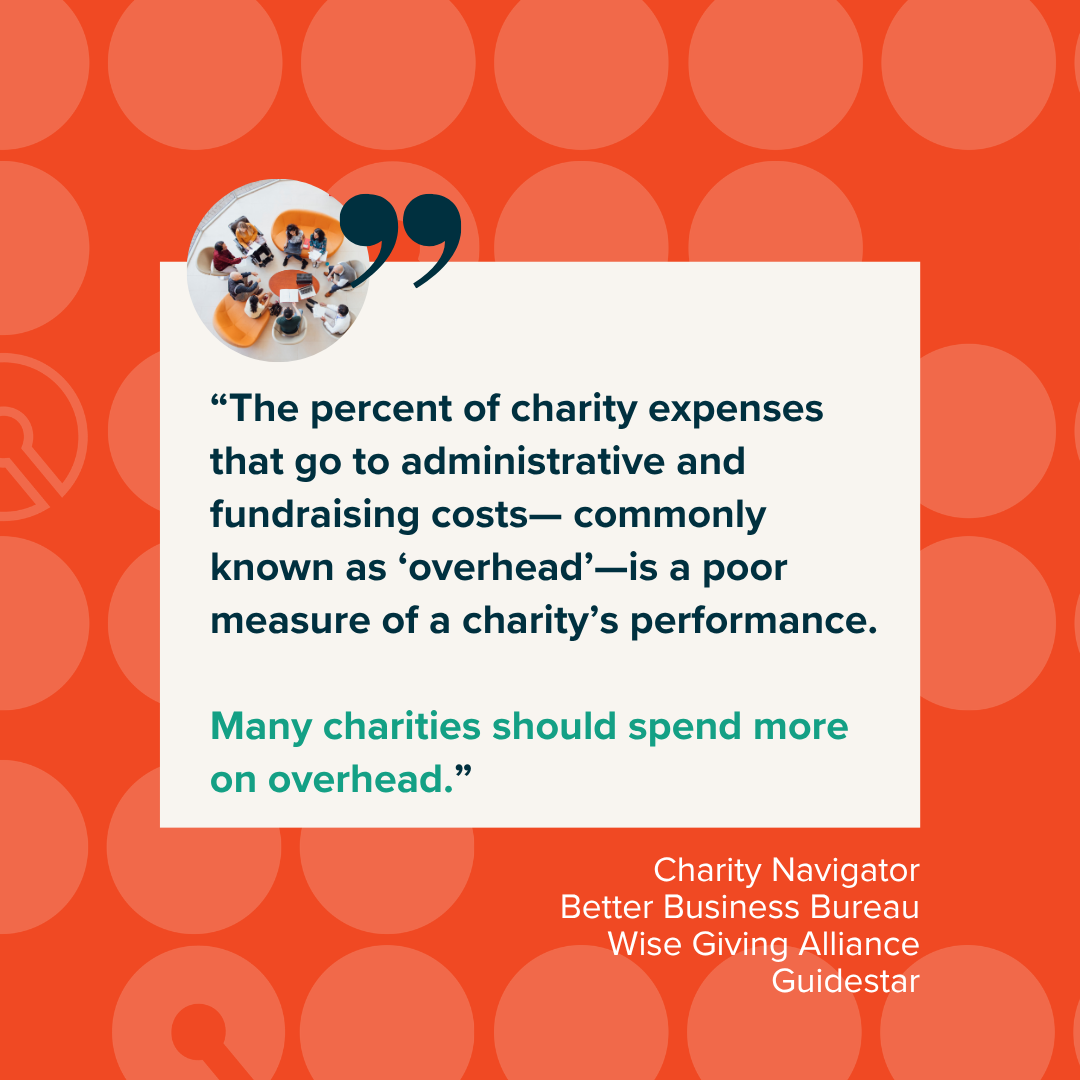
In their famous letter they said, “The percent of charity expenses that go to administrative and fundraising costs— commonly known as ‘overhead’—is a poor measure of a charity’s performance. Many charities should spend more on overhead.”
Underinvestment in your fundraising model, strategy, team, and their skillset is why you’re not growing your charitable revenue every year. It’s why your strategic plan isn’t funded and why your aspirational budget just stays aspirational. It’s why you can’t grow your programs.
The best news? You have the power to change it.
Step #1: Create the budget you truly need
Step #2: Invest in your team learning how to RAISE to that number every year
Here’s the hang-up. It’s easy to create an aspirational budget with all the things in it that you really need.
But, where orgs and boards get hung up? Step #2.
They think it's a slight tweak.
They think it will eventually just work.
They think the team will figure it out in time.
They think the next gala will save them.
They think their team is doing proper major-gift work.
It's a simple balance. If you want to raise to your aspirational budget, you must equip your team to align their hours with dollars to do so.
If you’re serious about investing in change in 2026, fill out this form and we'll hop on Zoom.
Whenever you’re ready to switch to high-ROI fundraising, there are THREE things you can do next:
👣 Follow me on LinkedIn where I share insider fundraising info daily — the same lessons I teach my clients through my consultancy about securing larger major gifts and diversifying revenue.
🍎 Get Resources + White Papers — download robust resources you can use to push against the nonprofits sector’s scarcity mindset, equip your board, and shift your entire team into high-ROI fundraising.
📈 Work with me to fully-fund your nonprofit organization’s strategic plan and aspirational budget. If you’re a business-minded nonprofit CEO or Executive Director with big growth plans but need to make charitable revenue from relational donors a bigger part of your budget, you can apply to work with me here.